About 2-5% of autosomal genes can be expressed in a clonally stable, random monoallelic manner in some cell types. Importantly, genes displaying random monoallelic expression (RME) are often associated with autosomal dominant disorders, including skeletal and cardiac myopathies. Despite the major implications of monoallelic expression for disease – particular in the context of heterozygous mutations where functional nullisomy can occur – the impact of RME in the physiopathology heart diseases and the epigenetic mechanisms underlying RME are largely unexplored. To address these questions, this project will exploit the mechanisms of RME and the impact on monoallelic expression in the context of inherited cardiomyopathies using both genetic engineering and genomics approaches. An understanding of the epigenetic control of RME genes could open up potential avenues of research with therapeutic value in heart pathologies.
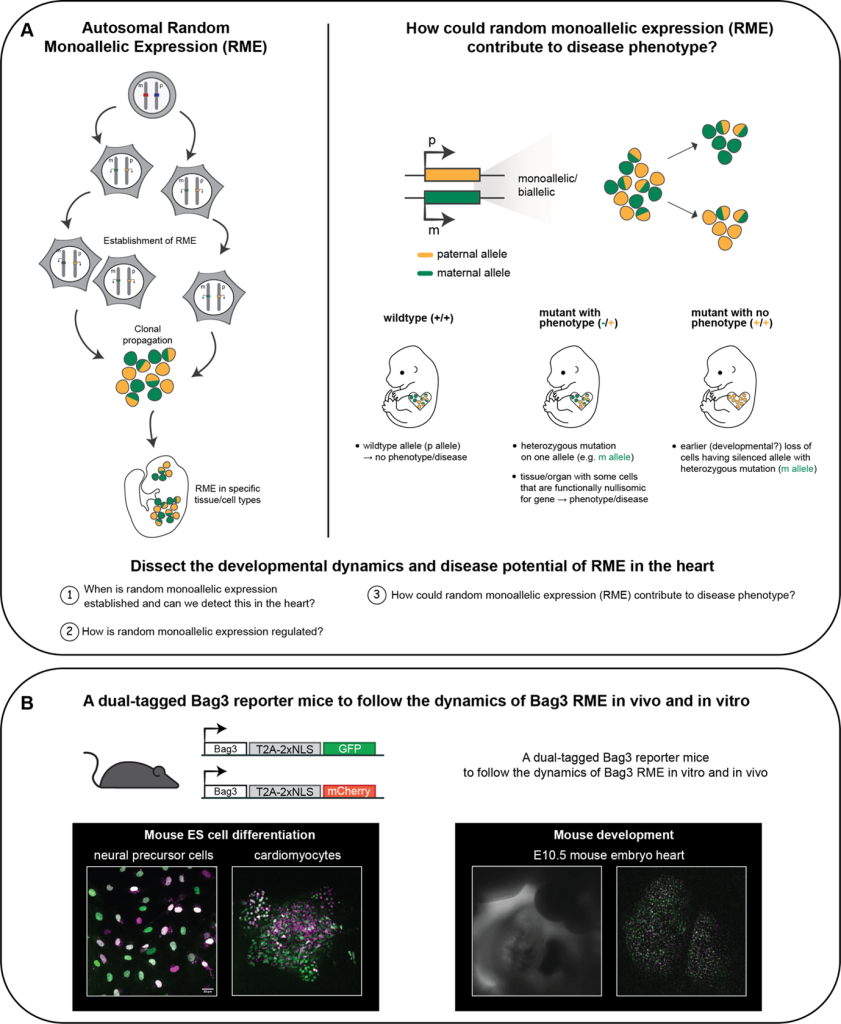
A| Autosomal random monoallelic expression (RME), the process where a gene on an autosome is transcribed from only one of its two parental alleles in specific or cell types. To date, the extent of RME is still somewhat debated, and mechanisms underlying this mode of expression are largely unexplored. The impact of monoallelic expression in the aetiology of autosomal dominant disorders or other pathologies has been unexplored so far. Project A09 will exploit the mechanisms of RME in the heart and the impact on monoallelic expression in heart disease. B| We have built a unique and powerful set of tools to study the developmental dynamics and disease potential of random monoallelic expression in the heart, including adual-tagged Bag3 reporter mice and mouse embryonic stem (ES) cells.