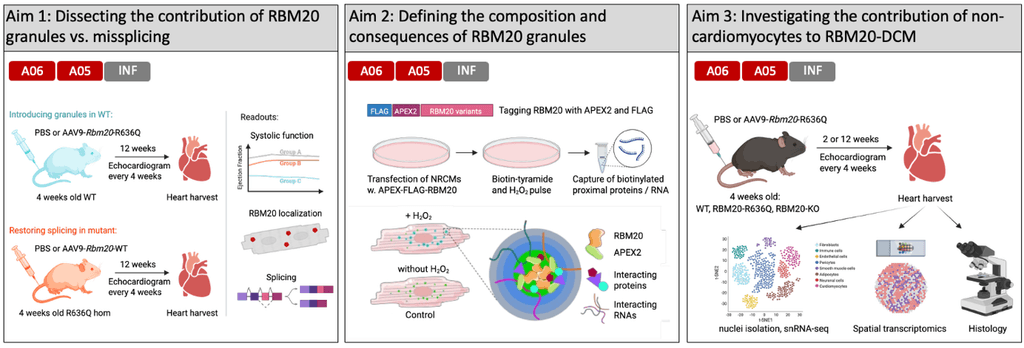
A06 pursues a novel strategy to treat an inherited form of dilated cardiomyopathy caused by mutations in the gene RBM20. DCM patients usually harbor one defective copy of RBM20 while the other one is still intact (haploinsufficieny). Upregulation of the “healthy” allele presents a pathway to restore RBM20 activity. By systematically manipulating the expression of thousands of genes, and analyzing their impact on the expression of RBM20 protein, we seek to uncover cellular pathways that can be targeted by drugs that modulate RBM20 expression and rescue the effects of the disease-causing mutations.

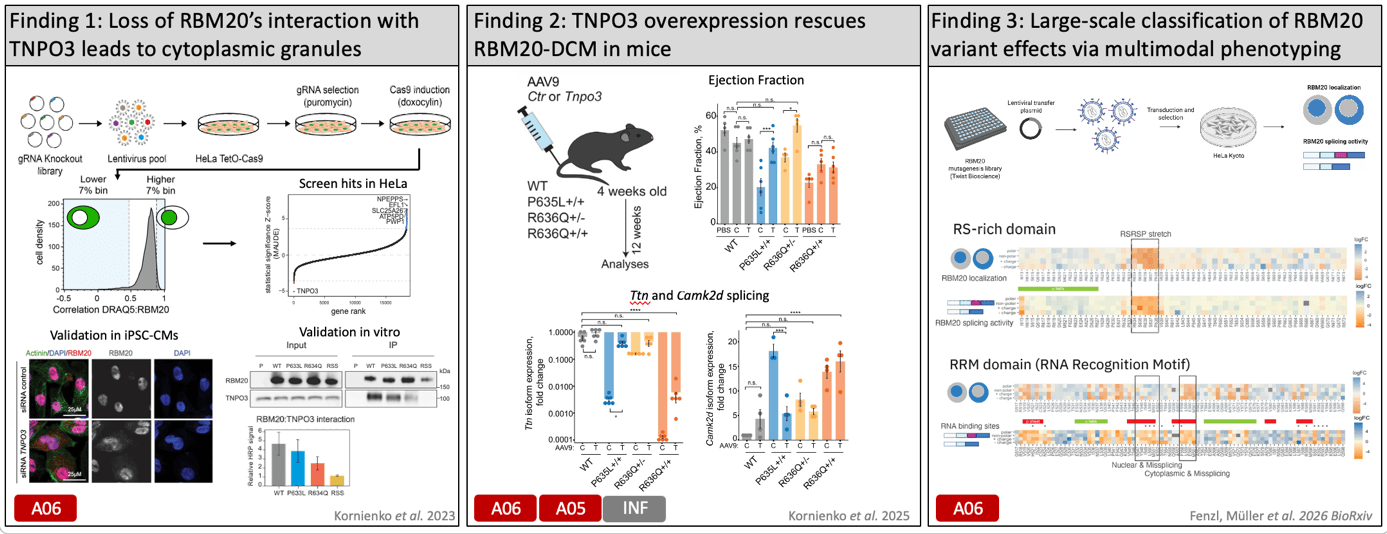
TNPO3 restores nuclear RBM20 and cardiac function in RBM20 cardiomyopathy.
Left: In healthy cardiomyocytes, wild-type (WT) RBM20 binds Transportin-3 (TNPO3) via its RS domain, enabling efficient nuclear import and stable nuclear localization. This supports proper alternative splicing of RBM20 targets. (Kornienko et al. 2023)
Middle: Pathogenic RBM20 RS-domain variants lose interaction with TNPO3, causing cytoplasmic mislocalization to granules and splicing defects that drive dilated cardiomyopathy (DCM). (Kornienko et al. 2023)
Right: AAV9-mediated overexpression of TNPO3 re-localizes mutant RBM20 to the nucleus, alleviates RBM20-cytoplasmic granules, restores alternative splicing, and rescues cardiac pump function in RBM20-mutant mice. (Kornienko et al. 2025)