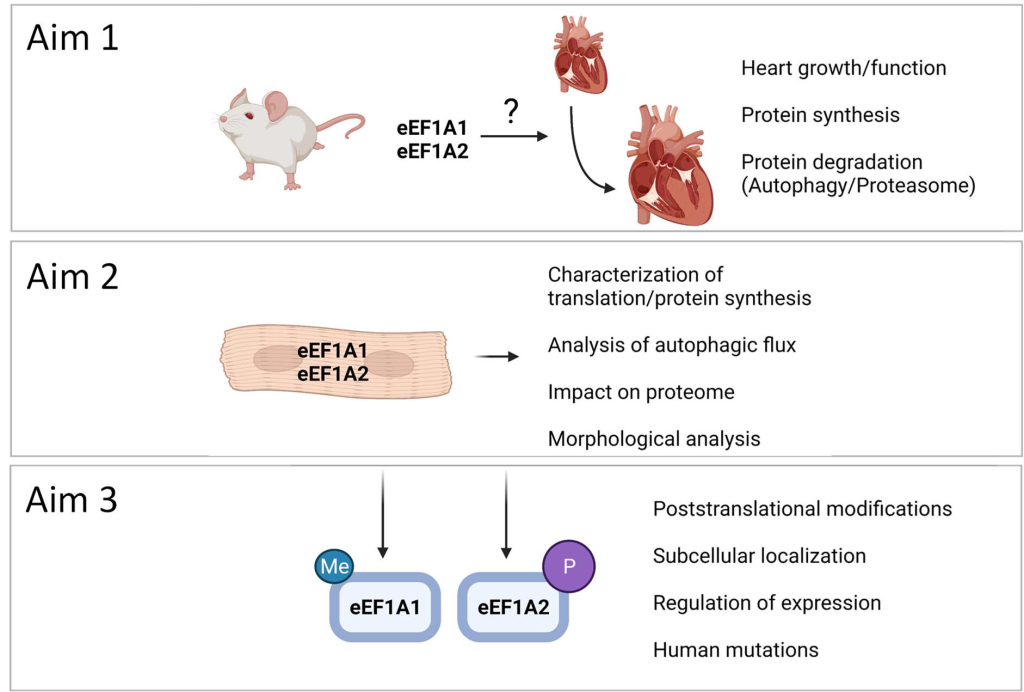
Heart growth after birth or during disease involves increased protein synthesis and reduced protein degradation. The cardiac function of one putative regulator of both processes, the eukaryotic elongation factor 1 (EEF1A) was so far not studied, but recently a gene-mutation in this protein was associated with human cardiomyopathy. We therefore hypothesize that EEF1A, expressed in two different isoforms (EEF1A1, EEF1A2) in cardiomyocytes, is a nodal regulator of cardiac homeostasis, growth and function. We created cardiomyocyte specific knock-out mice of both Eeef1a isoforms and will investigate how EEF1A functions in cardiomyocytes and if it has a therapeutic relevance.